

As legendary advertising executive David Ogilvy once said:
“The consumer is not a moron. She is your wife.”
Peter Drucker, widely regarded as the father of modern management, once stated: “Management is doing things right. Leadership is doing the right things.”
This quote perfectly captures the balance between promotion and decision making. Advertising may help a company gain attention, but leadership requires making decisions that protect the long term health of the organization.
In the modern business environment, one of the most misunderstood aspects of corporate growth is the difference between advertising relationships and business decisions. While both are interconnected, they operate from entirely different foundations and objectives. Understanding the distinction between the two is critical for sustainable growth, brand integrity, profitability, and long term market relevance.
Over the years, many organizations have failed not because they lacked visibility, but because they confused emotional relationships, popularity, or temporary publicity with sound business judgment. Advertising can create awareness, emotional connection, and public perception, but business decisions must ultimately be guided by strategy, data, sustainability, and value creation.
Advertising is emotional. Business is structural.
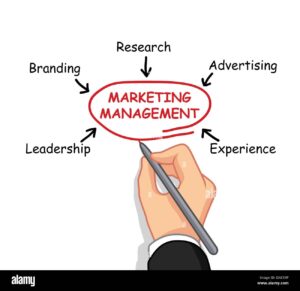
Advertising relationships are built around perception, storytelling, influence, trust, and audience engagement. The role of advertising is to create a connection between a brand and its audience. It shapes how consumers feel about a company, a product, or a service. Successful advertising humanizes businesses and builds loyalty over time.
As legendary advertising executive David Ogilvy once said:
“The consumer is not a moron. She is your wife.”
This quote highlights one of the most powerful truths in advertising. People do not simply buy products. They buy trust, emotions, experiences, aspirations, and identity. Advertising succeeds when it understands human psychology and communicates value in a relatable and authentic way.
However, while advertising can influence customer behavior, business decisions must go deeper than emotional appeal. Business decisions involve financial planning, operational efficiency, risk management, market positioning, investment strategy, scalability, and long term sustainability. A successful advertising campaign may attract attention, but poor business decisions can still destroy a company.
In many industries, especially real estate, construction, finance, and corporate services, companies often make the mistake of prioritizing relationships and visibility over operational realities. A company may invest heavily in branding, celebrity endorsements, public relations, and social visibility while neglecting internal systems, customer service, financial discipline, and project execution. This creates an imbalance where perception becomes stronger than performance.

Peter Drucker, widely regarded as the father of modern management, once stated:
“Management is doing things right. Leadership is doing the right things.”
This quote perfectly captures the balance between promotion and decision making. Advertising may help a company gain attention, but leadership requires making decisions that protect the long term health of the organization.
Strong business leaders understand that advertising should support business strategy, not replace it.
Relationships in advertising are important because markets are built on trust. Partnerships with media houses, influencers, agencies, public figures, and loyal customers can strengthen brand visibility and credibility. Networking and public perception can open doors to opportunities that traditional sales methods may never achieve.
Yet, effective business leaders know that every relationship must align with strategic objectives. Emotional attachment should never override critical thinking. Business decisions must remain objective, data driven, and aligned with organizational goals.
Warren Buffett famously said: “It takes 20 years to build a reputation and five minutes to ruin it.”
This is particularly relevant in today’s digital economy where public perception can change rapidly. A company may spend years building an admirable brand image through advertising, but one poor business decision can damage customer confidence almost instantly.
In the advertising world, visibility creates opportunity. In business, execution creates sustainability. The strongest organizations are those that understand how to integrate both disciplines effectively. They invest in advertising to communicate value while simultaneously building systems that deliver on the promises made through their campaigns.

This is why some brands remain respected for decades while others disappear after short periods of popularity. Long term success comes from aligning external messaging with internal performance.
Modern consumers are more informed than ever before. They no longer judge companies solely by advertising quality. They evaluate delivery, consistency, customer experience, transparency, and credibility. A beautifully advertised promise means little if operational execution fails.
Professor Philip Kotler, regarded globally as one of the leading authorities in marketing, stated:
“The art of marketing is the art of brand building. If you are not a brand, you are a commodity.”
However, becoming a strong brand requires more than marketing campaigns. It requires disciplined business decisions that consistently reinforce trust, quality, and value over time.
In industries such as real estate, this principle becomes even more important. Clients are not merely buying land, properties, or infrastructure. They are investing in confidence, reliability, security, and future value. Advertising may attract buyers initially, but only sound business practices retain trust and create lasting reputation.
Organizations that endure across generations understand one key principle. Advertising builds visibility, but business decisions build legacy.
A healthy business structure ensures that promotional efforts are supported by operational capacity, ethical leadership, financial intelligence, and strategic foresight. Companies that master this balance are often the ones that dominate industries and survive economic uncertainty.
At its core, advertising is about influence.
Business decisions are about responsibility.
One creates attention.
The other creates longevity.
True corporate excellence happens when both work together with discipline, vision, and integrity.